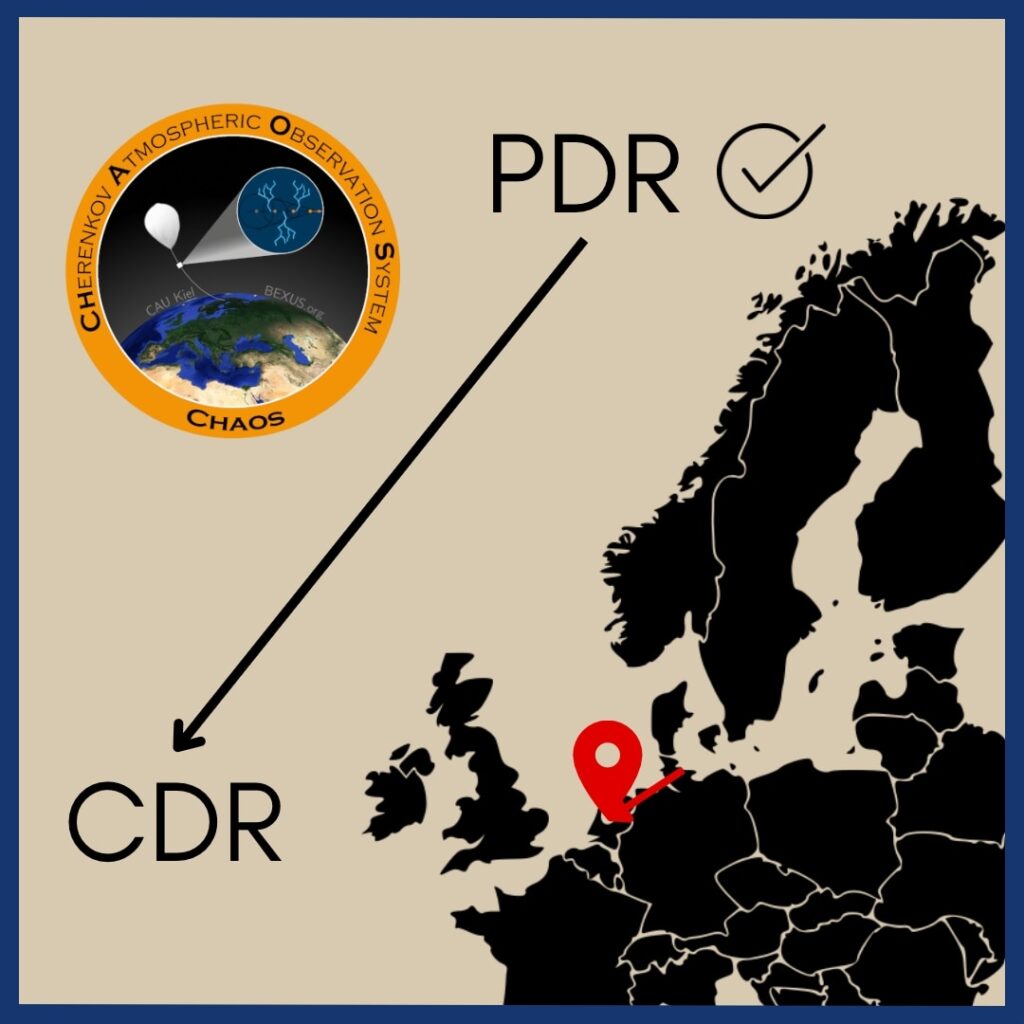
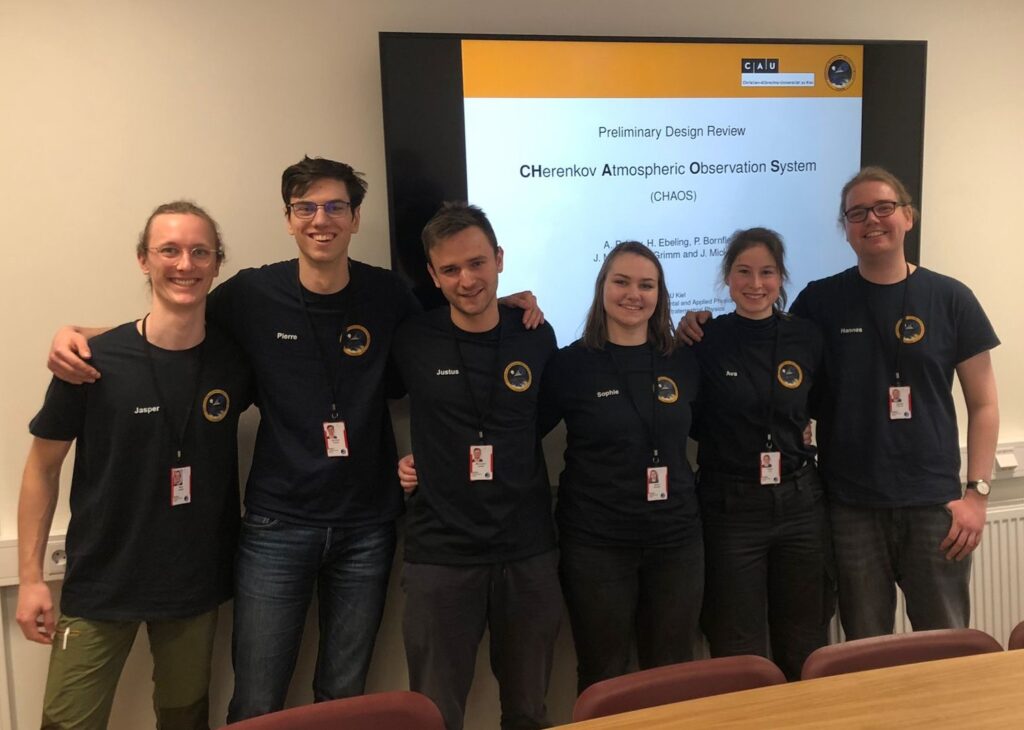
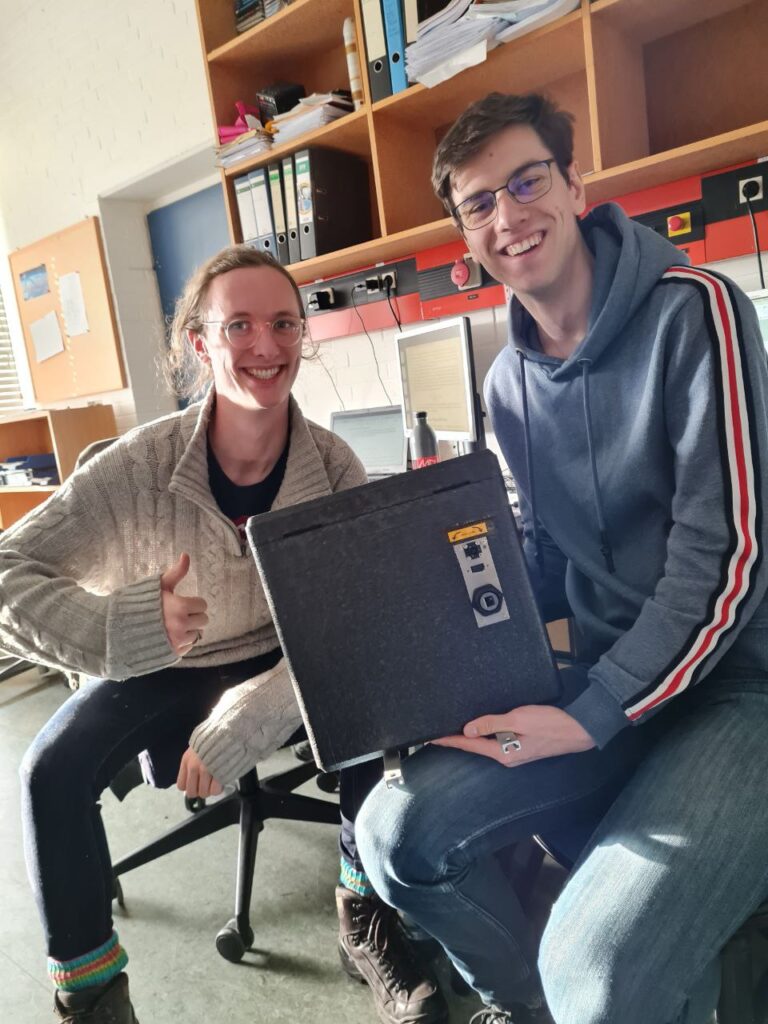
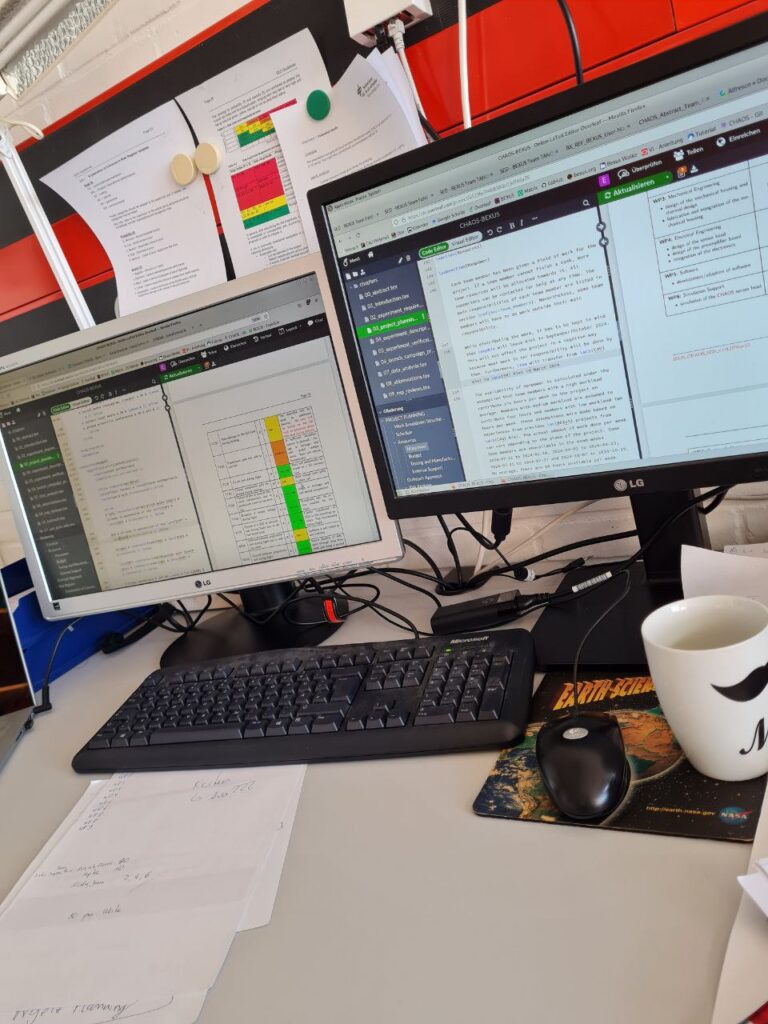
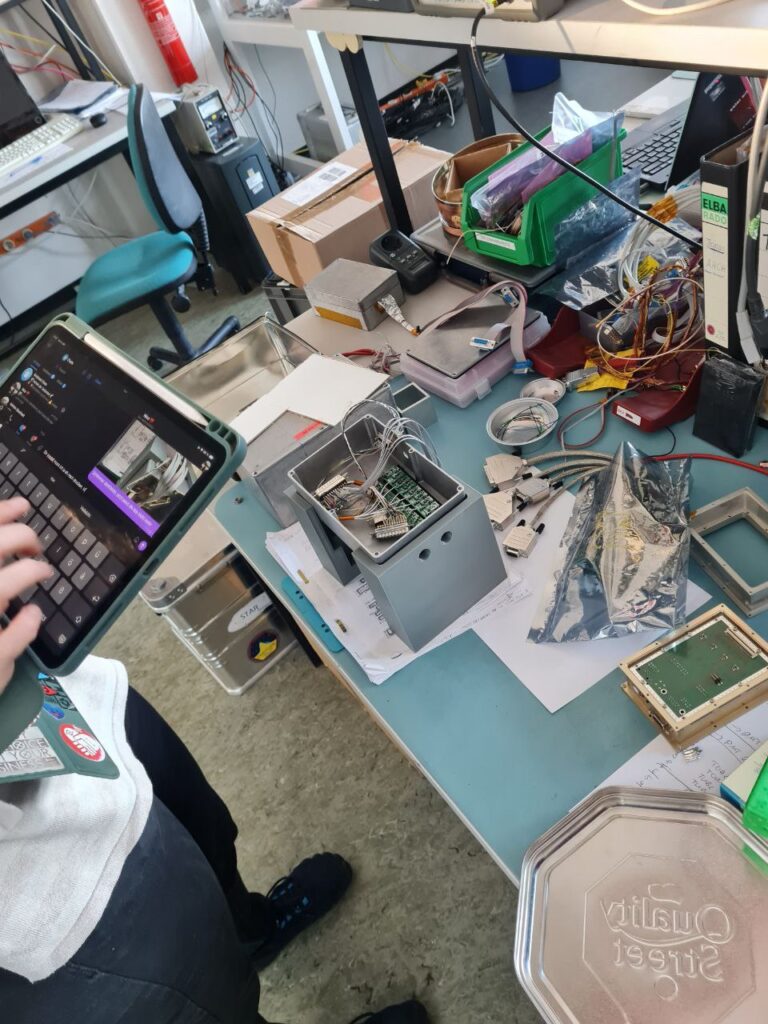
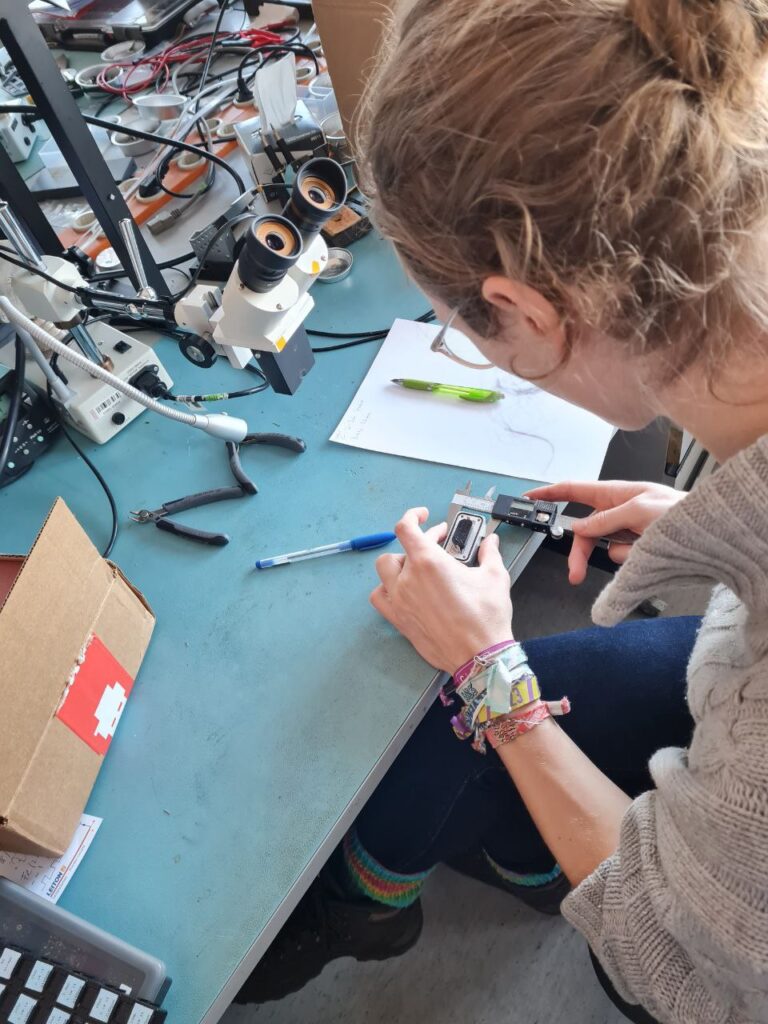
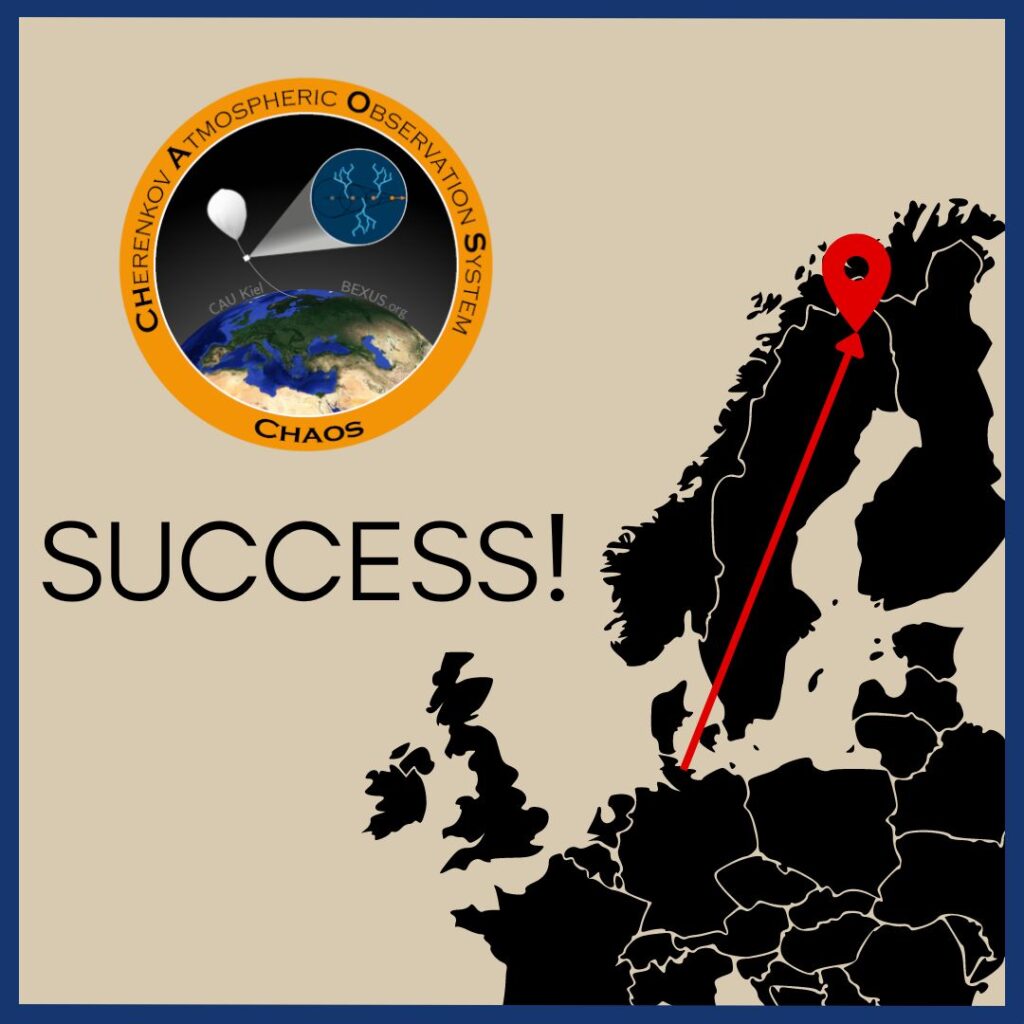
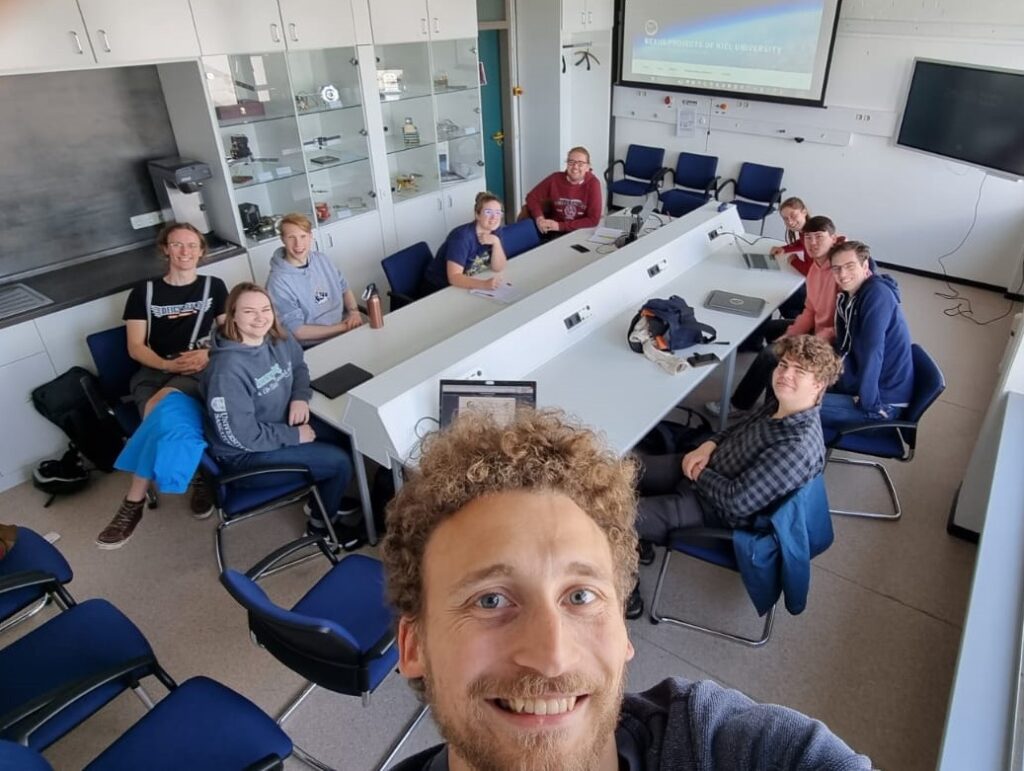
We are happy to report that we passed the Preliminary Design Review (PDR)! The next step will be the Critical Design Review (CDR) taking place in May. We will be travelling to the European Space Research and Technology Centre (ESTEC) in Noordwijk, the Netherlands, to present our final design in front of a board of experts.
This weekend, a segment of our group traveled from Hamburg to Kiruna, Sweden, to participate in the Student Training Week hosted at the Esrange Space Center. Upon arrival, we met with other BEXUS/REXUS teams at the airport and proceeded together to the center via bus.
The week commenced with a series of informative presentations about Esrange and the associated Space Agencies on Monday. A significant part of our schedule was dedicated to the Preliminary Design Review (PDR), during which we presented the current status of our experiment to a panel of experts. The session was interactive, with a focus on our project’s high voltage systems and pressure housing, prompting a detailed discussion and questions from the panel.
Throughout the week, we plan to provide additional information based on the feedback received and hope to progress to the next phase of the project.
In addition to project-related activities, the week included a tour of the Esrange site and further presentations, offering us the opportunity to learn more about space exploration and to network with teams from across Europe.
Stay tuned for more insights from our trip to Sweden!
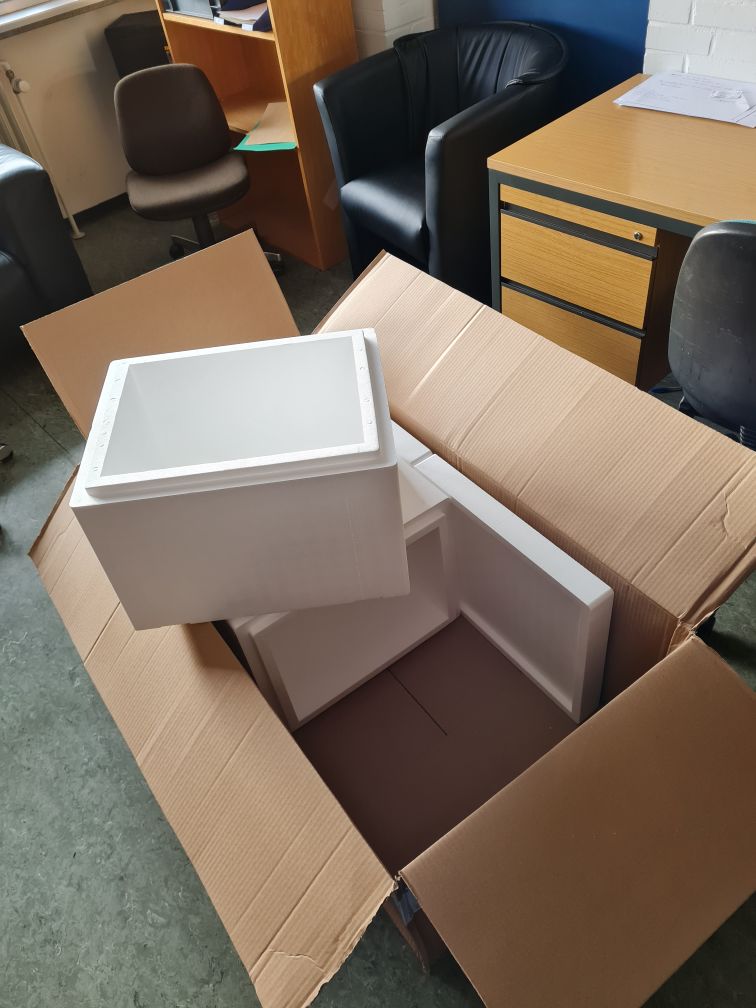
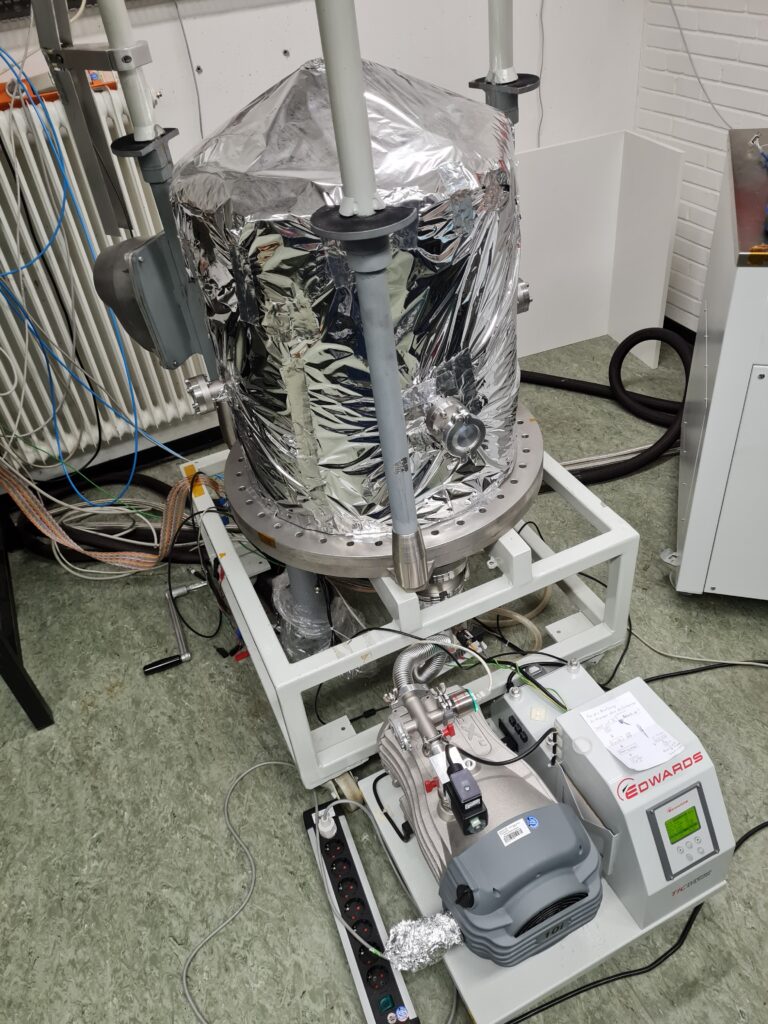
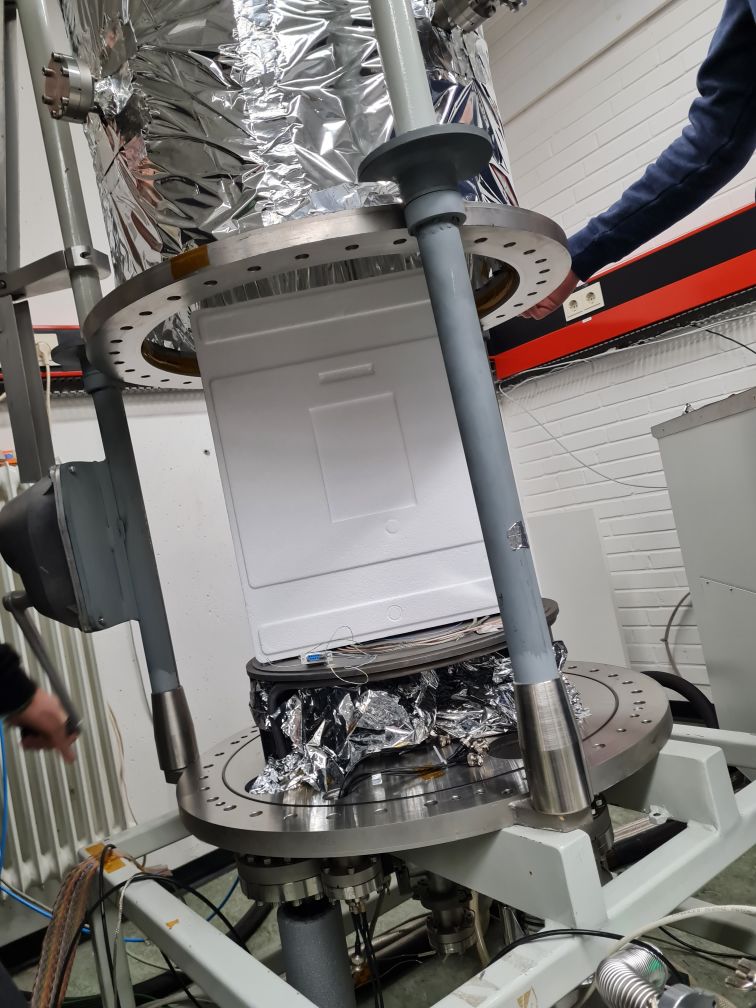
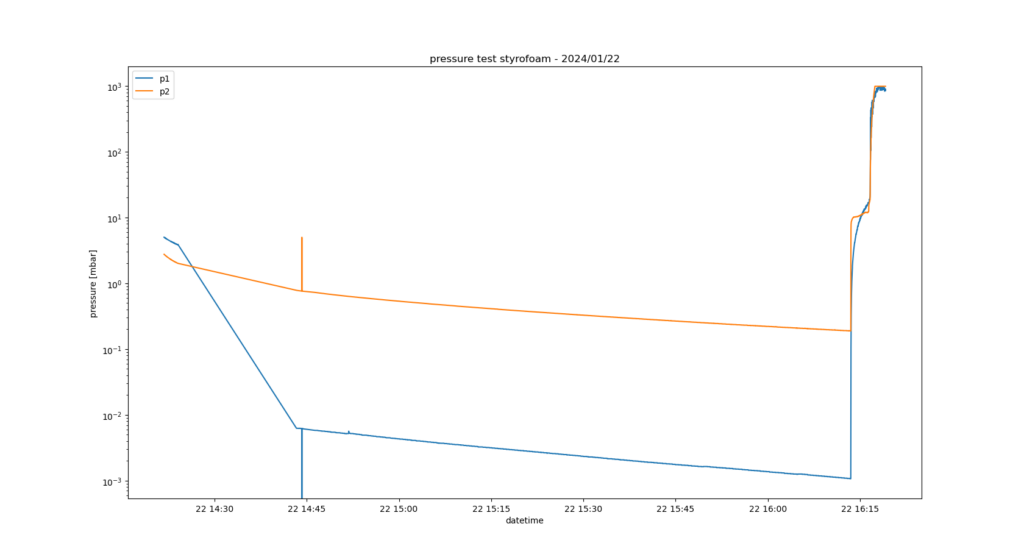
This afternoon, the styrofoam boxes, which we ordered, arrived at our institute. We plan to place our experiment CHAOS inside one of these boxes for thermal control during the flight on the stratospheric BEXUS balloon. This approach was successully used by other BEXUS experiments from our Department before. These boxes were designed to transport and cool food and drinks, not to be flown on a stratospheric balloon. To test wether the styrofoam withstands the expected low pressure environments, we spontaneously decided to put it into our vacuum chamber and start a test. The styrofoam encapsulates tiny bubbles of air. In a low pressure environment this air wants to expand and can become critical if the syrofoam loses its structural integrity because of this expansions. Unfortunately, we could only place the lid of a box inside the chamber because of the size of the box.
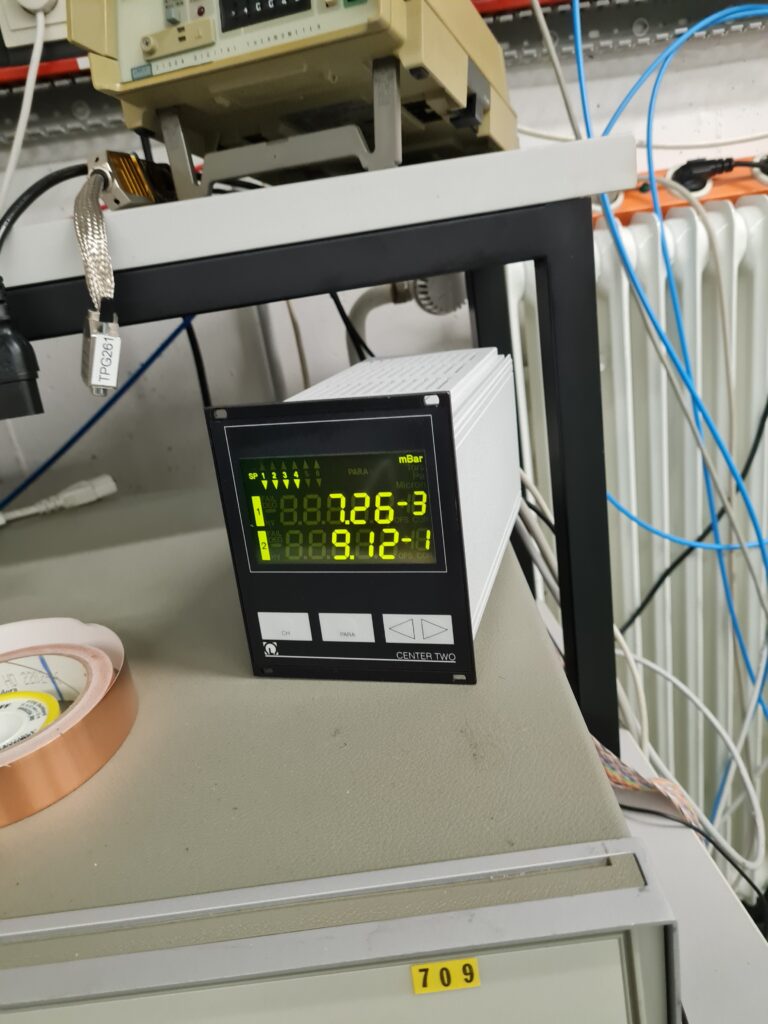
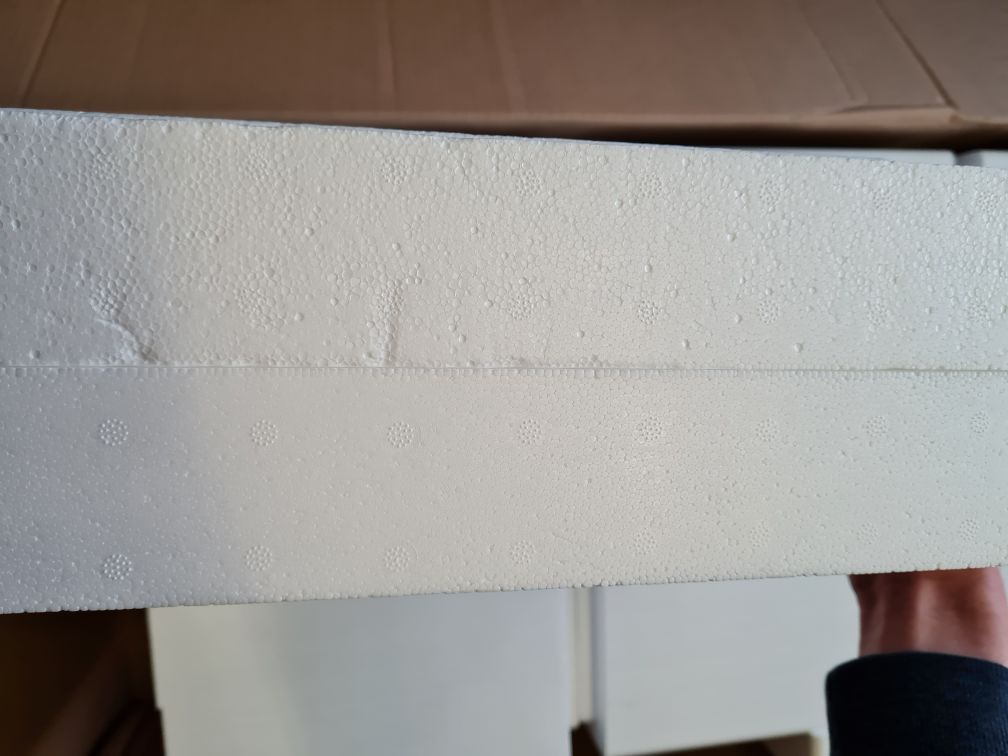
The results of our test can be seen below. The plot shows the pressure of the backing pump (p2) and within the chamber (p1). We can see that we reached pressures of less than 0.01 mbar. This is three orders of magnitude below the expected pressure environment during the BEXUS flight. In the last picture we see the comparison of the tested styrofoam (top) with an untested lid (bottom). The tested lid shows some open pores, but the styrofoam kept its structural integrity. Therefore, we conclude that the styrofoam boxes are ready for flight.
CHAOS has successfully started into the year 2024. The next big milestone on our journey is the Preliminary Design Review (PDR) in Kiruna, Sweden at the beginning of February. At the PDR we will present the current status of our experiment design. But first, we have to hand in our first version of the SED (Students Experiment Documentation) at the end of January. This document includes all relevant information regarding our experiment. Currently, we are finalizing the design of CHAOS to include it in the SED and present it at the PDR. It is a lot of work but also a lot of fun. We have been told that it might be cold in Kiruna, but the polar lights make up for it. Therefore, the work will be definitely worth it. Stay tuned for more information on CHAOS and our journey to Sweden.
CHAOS has been selected for the 15th cycle of the BEXUS program! The next step of our journey will be the Preliminary Design Review (PDR) in February next year in Kiruna, Sweden, where we will be presenting the current status of our experiment. The final flight will take place next fall, also in the Esrange Space Center in Kiruna.
Thank you @germanaerospacecenter for selecting our experiment, we are very excited about this opportunity!
I am Tom Ruge and I am writing my bachelor’s thesis about a part of our instrument CHAOS and in the following I will tell you what we have been doing lately.
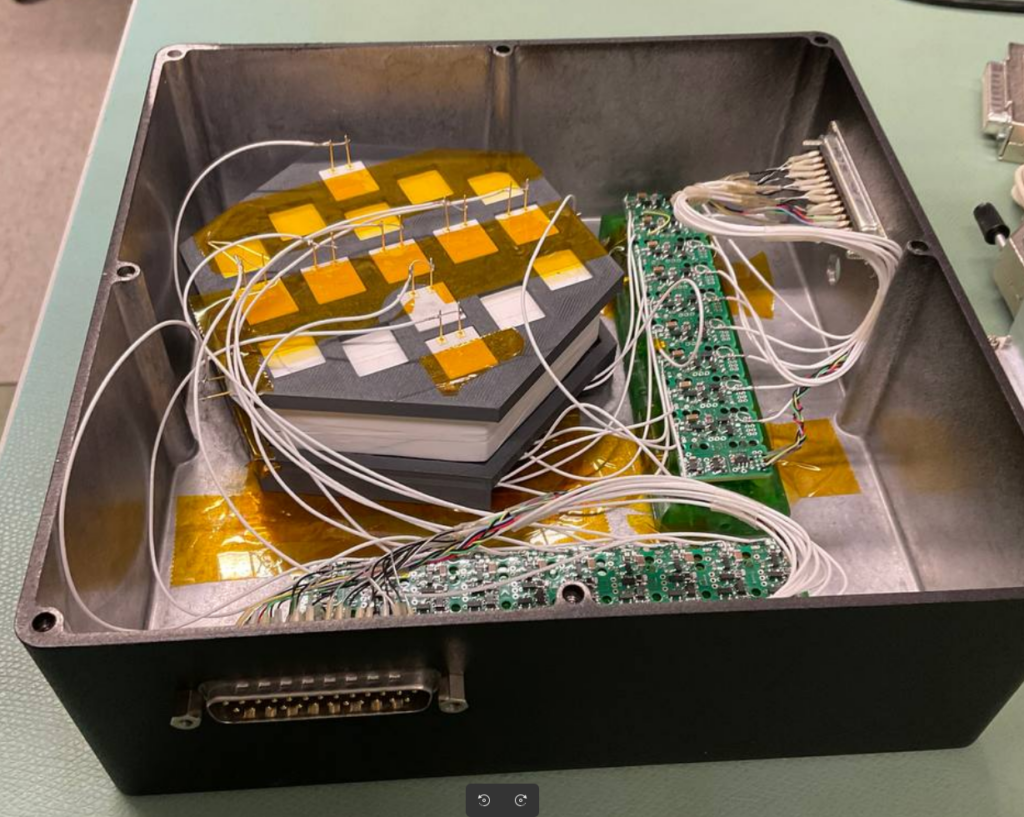
For our particle detector, which we are currently building, we are using a transparent BGO scintillator crystal. When a charged particle flies through it, light is emitted, which is then measured. Based on how light is emitted and how it is ultimately measured, conclusions can then be drawn about the particle. Depending on where exactly the particle flies through the BGO scintillator crystal, I investigate how exactly the light is emitted and then measured by the photodiodes. And that’s exactly what my bachelor’s thesis is about, which I started a few weeks ago. So we are trying to better understand our new BGO crystals.
I spent the last few weeks putting together the test setup in our electronics lab with the help of our team and was finally able to start my first measurement on Friday and everything seems to be working well so far. Woohoo! Now you might be wondering which particles we are actually measuring in our electronics lab when we are not using a radioactive source? They are mainly muons, which originate from high-energy particles from outer space and then fly down to us. I will now continue to work on my bachelor’s thesis and find out new things. See you soon!
The selection workshop is over and we are on the train back to Kiel. We had two days with lots of new impressions and experiences at DLR in Bonn.
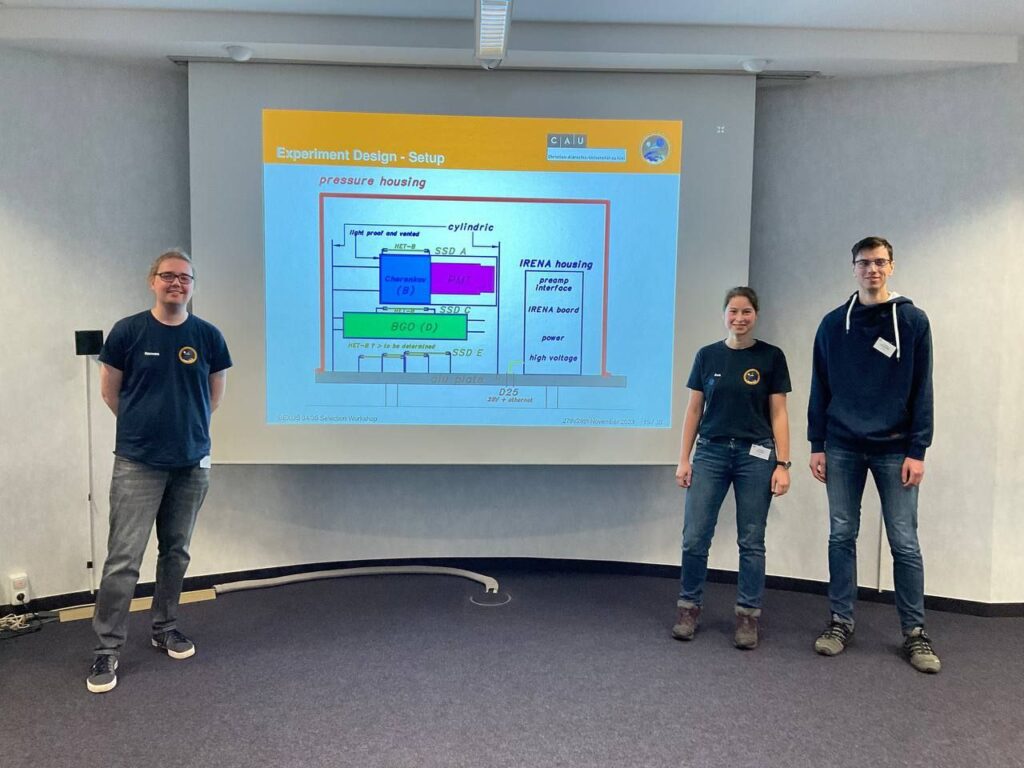
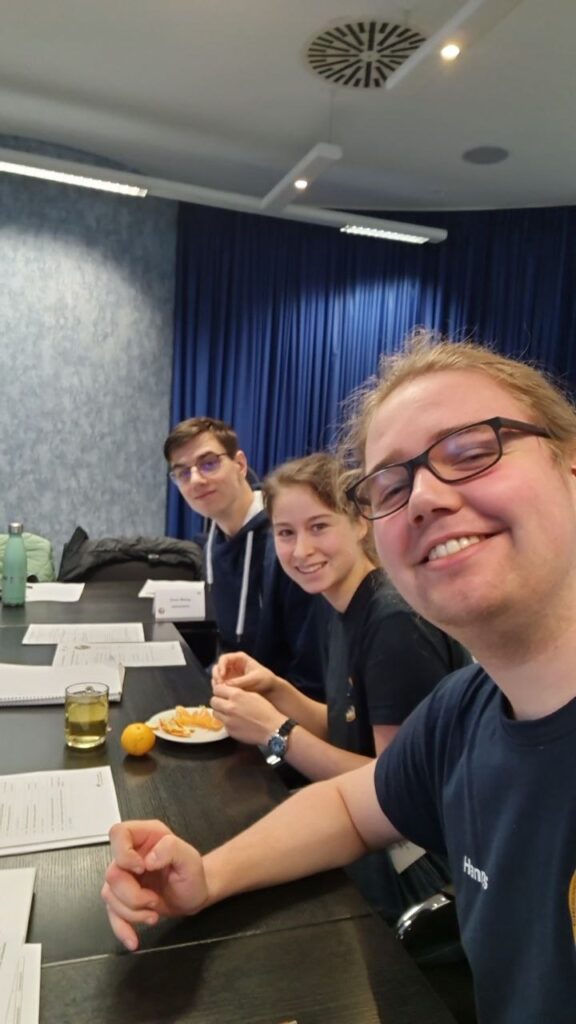
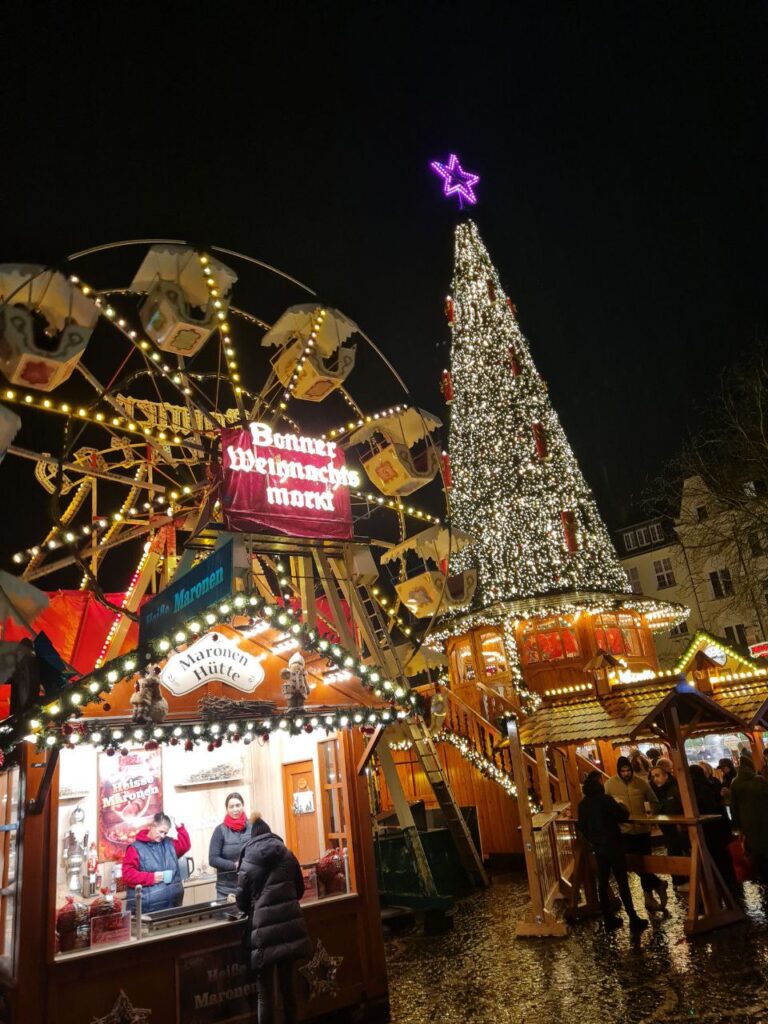
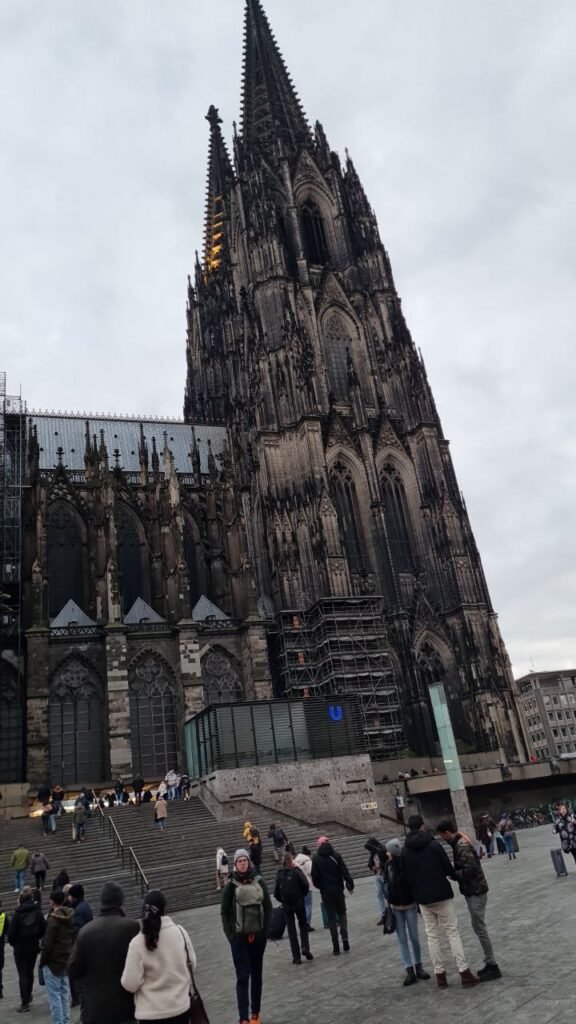
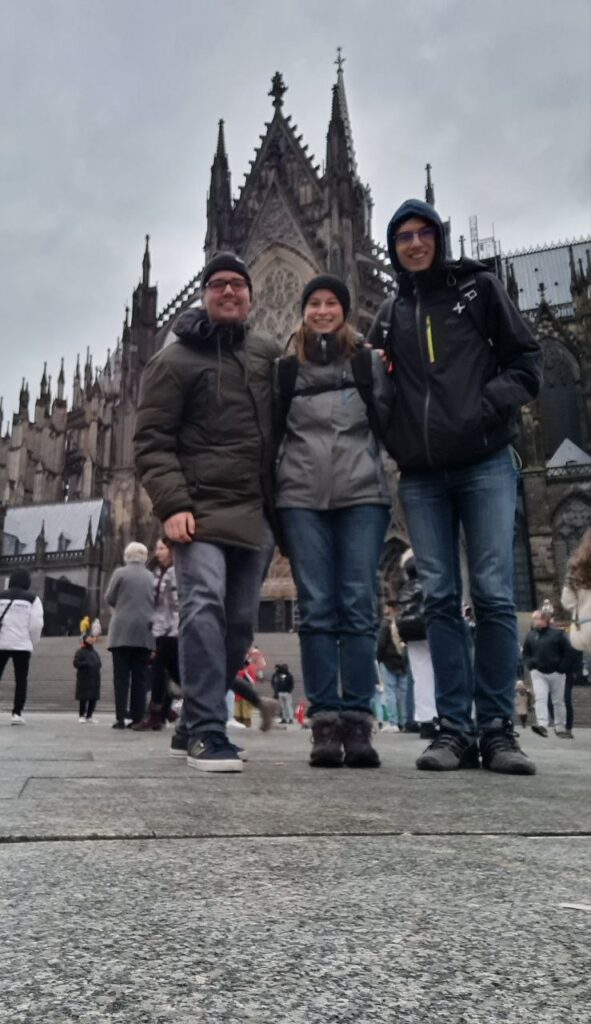
We arrived in Bonn on late Sunday evening. On Monday morning the workshop started with a general introduction to the BEXUS program. After that the invited teams presented their proposed experiments. Each team held a presentation of about 25 minutes followed by a discussion between the presenting team, the board of experts and the other teams. There were a total of three teams proposing an experiment for BEXUS and five teams proposing an instrument for the REXUS program. Our presentation of our proposed instrument CHAOS was the second talk of the day. Even though we were a little bit nervous, our talk went very well. The board of experts had some questions about our experiment design and scientific goals but we believe we could give satisfying answers. We were especially happy about the positive feedback which we got from the other applying teams. We ended the day with the other teams going out for burgers and visiting the Christmas market. Today the last three teams presented their experiments and we got some more information on what to expect from the BEXUS program and the further schedule. The workshop ended at noon with the board of experts starting to discuss which experiments they want to accept. The final decisions will be announced until 18th December. We had some time left before we had to catch our train, so we had lunch with the team SHAMA from STAR Dresden and in Cologne we took the chance for a picture at Cologne Cathedral.
One of the cool things during the workshop was meeting the other student teams. We were introduced to many promising experiments and it was especially interesting to see students from other fields than ours proposing ideas. We as physicists were forced to think outside the box. There were two teams focussing on the behaviour of liquids in microgravity which is particularily interesting for the fuel tanks of rockets and satellites. Another experiment wants to look at the effects of the conditions in the stratosphere on oxygen producing bacteria. But these are only a few examples.
The selection workshop was a lot of fun and we hope we get the chance to take the next steps in the BEXUS program. We are looking forward to potentially meeting the other teams again (Jay, I still owe you a drink). You can find more pictures and stories covering our journey on our instagram channel. There we will keep you updated on everything related to CHAOS, just as in this blog.
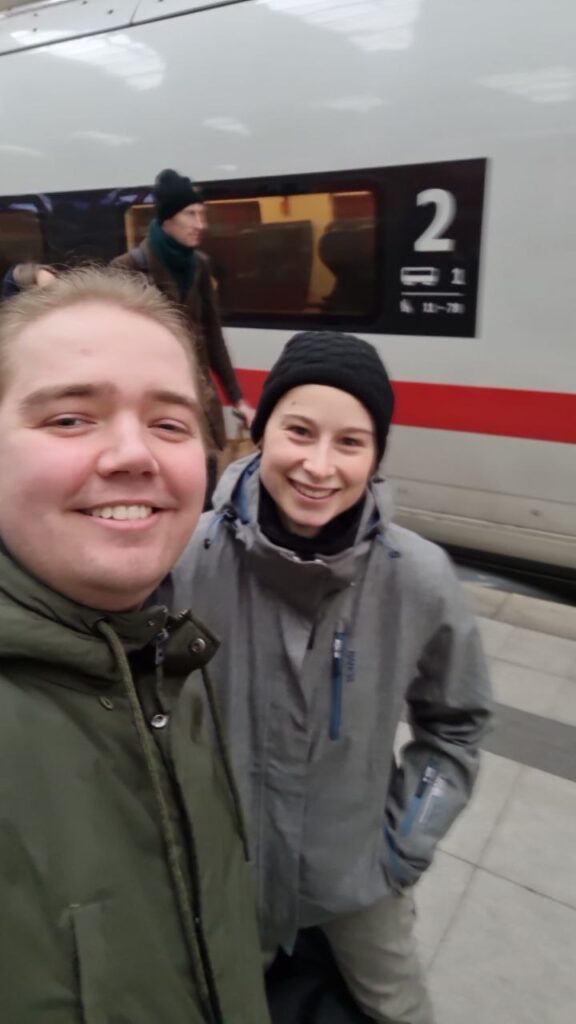
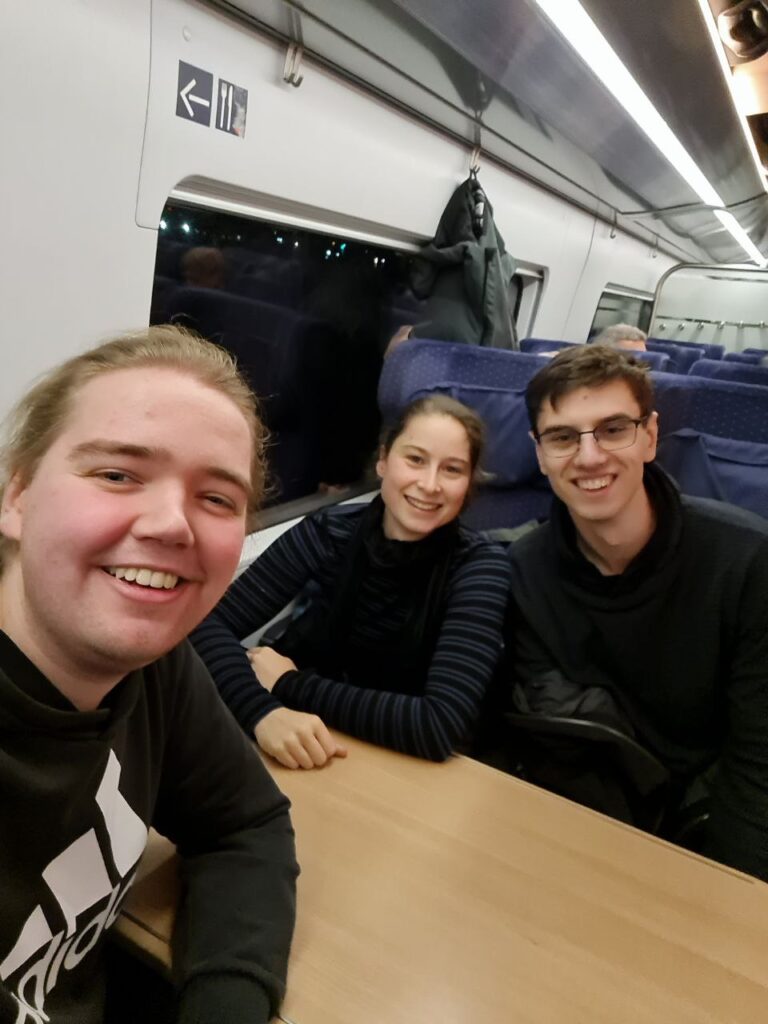
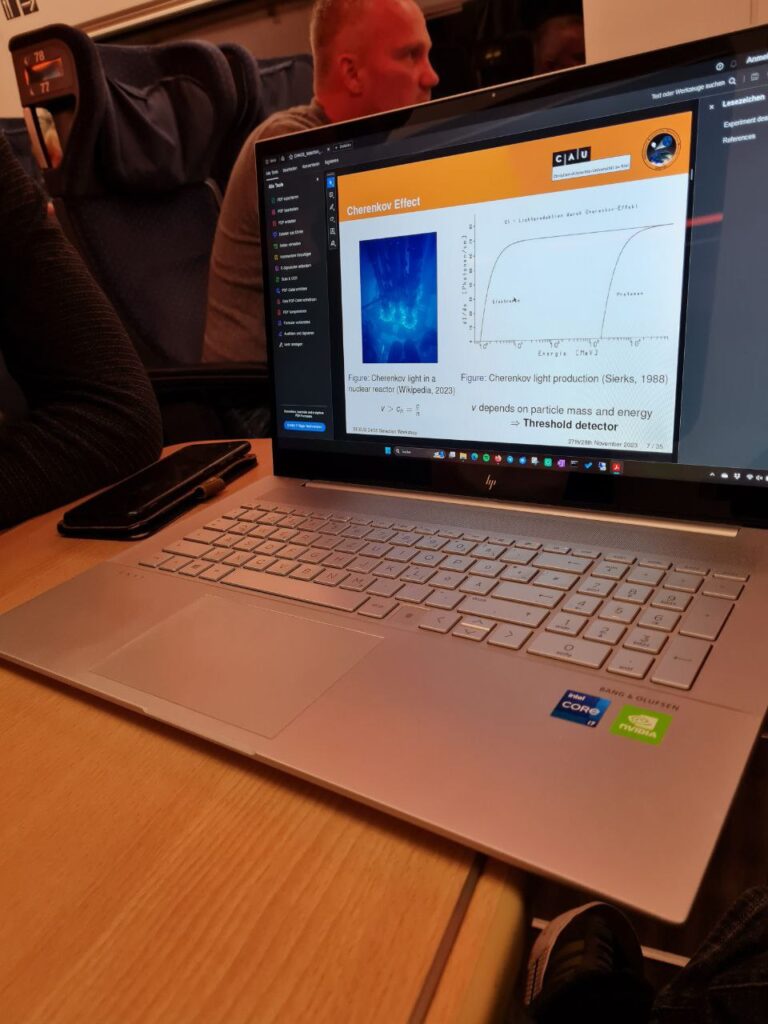
This Sunday afternoon we (namely Ava, Pierre and Hannes) started our journey to the selection workshop in Bonn. During the next two days we are going to meet the other candidates for the next BEXUS and REXUS cycles at the German Aerospace Center. It is planned that we hold a talk to present our proposed instrument CHAOS. After the selection workshop the final decision on which experiments can take part in BEXUS will be made by a board of experts and announced on 18th December. We did some last adjustments to our talk while sitting on the train and are looking forward to the selection workshop.
CHAOS has been selected to be presented at the selection workshop for the 15th BEXUS cycle from 27th November to 28th November 2023 in Bonn. We are happy about this great opportunity and will keep you updated. After the selection workshop the final decision on which experiments will have the chance to take part in BEXUS will be made.
In today’s meeting we discussed the final version of our Experiment Proposal for the upcoming BEXUS cycle. After some minor adjustments, we submitted our application to the DLR. Now, we are hoping for a positive response. If we are invited, we will attend the DLR Selection Workshop on November 27th and 28th. Stay tuned for further information on our instrument CHAOS.